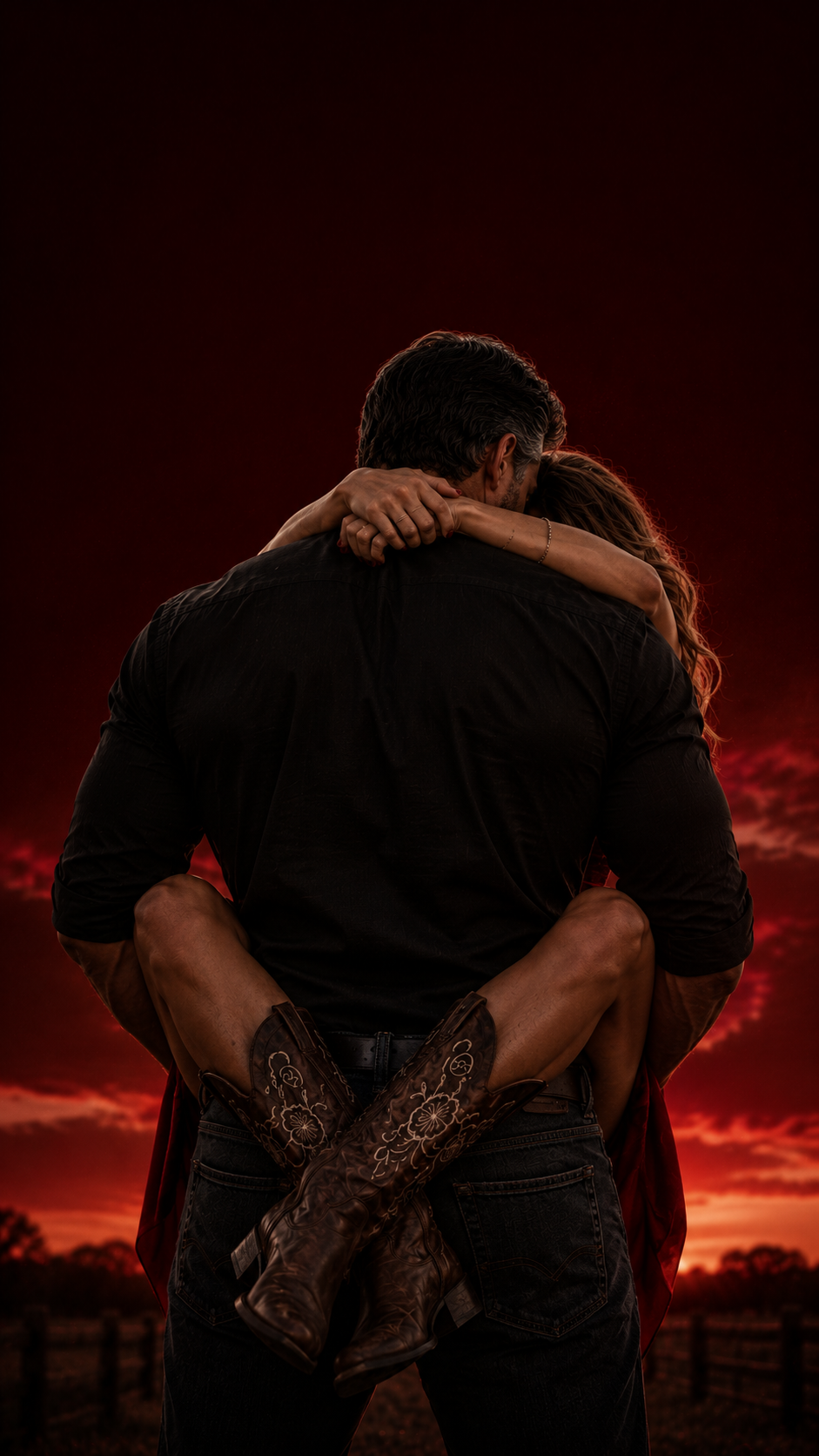
Wide Open – Chapter 3 – Field Flowers
He didn’t text.
The next day came and went and my phone sat on my desk at work doing everything phones do except produce a message from a man with warm brown eyes and grey at his temples who had rinsed my coffee mug without being asked and walked out my front door with the easy, unhurried stride of someone who maybe did this kind of thing regularly and maybe didn’t and I had no way of knowing because I did not have his number and he did not have mine and that had been, I was now reconsidering, a spectacularly incomplete conclusion to an otherwise well-executed evening.
“You’re staring at your phone,” Marcus said, from across the open office.
“I’m working,” I said.
“You’re staring at your phone like it owes you something.”
“The freight manifest from the Laredo depot owes me something. My phone is just a phone.”
He went back to his screen.
I went back to the freight manifest.
The freight manifest did not hold my attention the way it usually did.
Here is what I told myself by noon:
It was one night. A good night – an excellent night, if I was being honest, which I generally am – but one night. Two people who hadn’t exchanged numbers. He’d been back in town for what, a few weeks? He was setting up a business. He had things going on. And I had made a choice going in, walking up that porch with my key in my hand and a man behind me who had been looking at me all evening – I had made that choice with my eyes open and the full awareness that one night was a complete and standalone unit of experience that did not require a sequel.
I was fine with that.
I was thirty-seven years old and I had survived worse than a man not calling.
By two in the afternoon I had mostly convinced myself.
By four I had stopped checking my phone.
By five I was gathering my things and telling myself that the evening ahead involved dinner and a television program and an early bedtime and that this was a good and reasonable plan for a grown woman on a weekday.
I walked out of the building into the late afternoon heat.
He was leaning against his truck.
Not sitting in it, not standing at full height – leaning, his back against the driver’s door, his arms crossed, his ankles crossed, his eyes on the door of my building like he’d been watching it for a while.
In his right hand was a bunch of field flowers.
Not a florist’s bouquet. Not the kind of thing you order online with a card and a delivery fee. The kind that grows along the fence lines out past the edge of town – yellow and purple and white, the kind of flowers that don’t have formal names, that someone had clearly pulled from the ground with their hands that day.
He was big.
I don’t know that I’d fully registered how big he was in the bar or the truck or the dark of my bedroom, but standing against his truck in the afternoon sun with a bunch of wildflowers in his hand he was large in the specific way of a man who takes up more space than he seems to require – broad and solid and slightly awkward in the way of large men holding small flowers who have not entirely reconciled themselves to the situation.
Every single person walking out of my building clocked it.
I felt the looks.
This town was not large enough for private moments.
I walked toward him.
He saw me coming and something in his posture shifted – a slight, involuntary straightening, the specific body language of a man who had been waiting and had just confirmed the wait was almost over – and he pushed off the truck door and held out the flowers.
“These are for you,” he said.
“I can see that,” I said.
I took them.
They smelled like the edge of town in late afternoon, dry grass and wildness and the particular sweetness of flowers that hadn’t been cultivated into anything.
“You don’t have my number,” I said.
“No,” he said.
“So you waited outside my office.”
“Yes.”
“You know where I work.”
“Small town,” he said. “Wasn’t hard to find out.”
I looked at him.
He looked back with the same steady, warm, unhurried quality from the bar – comfortable in what he was doing, not performing it.
Behind me I heard someone – it sounded like Dana, who should not have been here but who had a friend in our building and occasionally stopped by – say something under her breath that I chose not to acknowledge.
“People are watching,” I said.
“I know,” he said.
“The whole town is going to talk about this.”
“Probably,” he said. “You care?”
I thought about it.
“Not particularly,” I said. “I just want you to know I know.”
“Fair enough,” he said. “Can I ask you something?”
“You’re already asking,” I said.
“Will you go out with me,” he asked. “Properly. Not -“ He paused, and the slight, warm awkwardness of a large man with wildflowers choosing his words carefully was, I will admit, doing something to my general resolve. “Not just the one night. Will you date me?”
I held the flowers.
They smelled like the edge of town.
He was looking at me with the steady, warm patience of a man who had decided he wanted a specific thing and had shown up at a woman’s office with wildflowers to ask for it, and if the answer was no he would receive that information and handle it with dignity, but he was not going to not ask.
Behind me, I was approximately eighty percent sure Dana was watching from a window.
“You pulled these yourself?” I asked, gesturing with the flowers.
“This morning,” he said. “Before I opened the shop.”
“You knew where to find them?”
“Used to ride my bike out that way when I was a kid,” he said. “Some things don’t change.”
I looked at the flowers.
I looked at him.
The grey at the temples. The warm brown eyes. The specific, warm awkwardness of a large capable man doing something tender and not pretending he wasn’t.
“All right,” I said.
“All right yes,” he said, “or all right you’ll think about it?”
“All right yes,” I said.
The thing that happened to his face then was not quite a smile – it was the specific, warm, involuntary shift of a man who has received good news and is not managing his reaction to it properly.
I found it, against my better judgment, extremely appealing.
“Give me your phone,” I said.
He handed it over.
I put my number in and handed it back.
“There,” I said. “Now you don’t have to stake out my office.”
“I would have,” he said. “However long it took.”
I looked at him.
“Logan.”
“Jessica.”
“That’s either very sweet or slightly alarming.”
“Could be both,” he said.
“Text me,” I said.
“Tonight,” he said. Not a question.
I walked to my car.
I was aware of him watching me walk to my car.
I was aware, as I put the wildflowers on the passenger seat and started the engine, that the entire late afternoon exodus of my office building had witnessed a large man with dark hair and grey temples hand me a bunch of field flowers and ask me out, and that by morning it would be general knowledge from one end of this city to the other.
I found, pulling out of the lot, that I did not particularly mind.
His text arrived before I reached the first traffic light.
Tonight. Seven. I’ll pick you up.
I read it at the light.
I drove home.
The flowers were on the passenger seat, smelling like the edge of town, and I thought about one night being a complete standalone unit and I thought about the way he’d pulled those flowers himself that morning before he opened the shop and I thought:
Well.
Jessica.
Here you go again.
He picked me up at seven.
He was wearing clean jeans and a dark shirt and he’d done something with his hair that suggested he’d thought about it, and when I opened the door he looked at me the way he’d looked at me across the bar – the full, unhurried, warm version – and said: “You look good.”
“You’re not bad yourself,” I said.
We went to dinner.
It was not fancy. It was not a production. It was a table at a place we both knew and food we both liked and a conversation that moved the way good conversations move, without agenda and without effort – the easy, widening kind where one thing leads to another and you look up and two hours have passed and the table still has food on it because you forgot about the food.
He told me about his grandparents’ house – the specific, warm love in the way he talked about the house, the way his grandfather had kept the garage, the way his grandmother had kept everything else. He told me about the detailing studio with the quiet, focused pride of a man who had built something from what he had and was not apologizing for the scale of it.
I told him about logistics, which sounds boring and isn’t when you tell it right – the specific, moving-parts puzzle of getting freight from one place to another, the satisfaction of a problem solved before it became a problem, the particular pleasure of a system that ran clean.
He listened like he was actually listening.
That, I want to say, is rarer than it should be.
“You like it,” he said. “The work.”
“I like things that work,” I said. “And I like knowing why they work.”
“Same,” he said.
He was looking at me across the table with the warm, specific attention that I was beginning to understand was simply how he looked at things he was interested in.
“You’re going to be trouble,” I said.
“Why’s that?” he asked.
“Because you pay attention,” I said. “Men who pay attention are trouble.”
He looked at me for a moment.
“I’ll take that,” he said.
I took a bite of my dinner.
Outside the window the town went about its evening business, and inside the restaurant a large man with grey-tipped hair and warm brown eyes was paying attention to me across a table with a focused, unhurried warmth that I felt, despite my best efforts, settling into something.
I told my best efforts to mind their own business.
He drove me home.
He walked me to my door.
He kissed me on the porch in the specific, warm, unhurried way I was beginning to understand was his register for most things – no rush, no performance, the full and patient attention of a man who was exactly where he wanted to be and knew it.
“I’ll call you,” he said.
“You better,” I said.
He walked back to his truck.
I went inside.
I stood in my hallway with the wildflowers in a glass of water on the kitchen counter and the warm porch still on my lips and I thought:
This is either going to be very good.
Or it’s going to hurt.
Probably both.
Probably worth it either way.