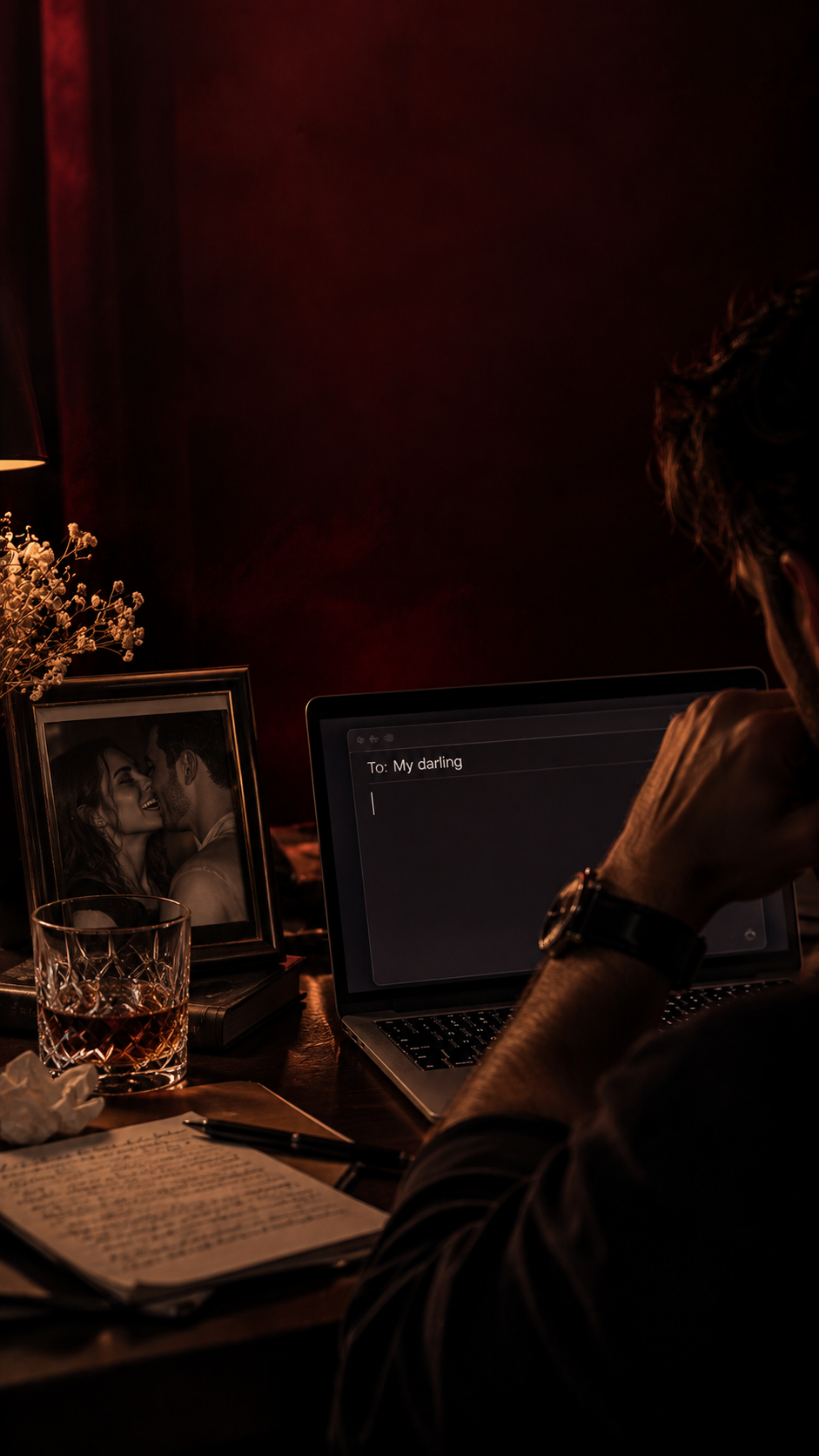
My Darling – Chapter 3 – I Notice You
My darling,
I know exactly what you’re about to say about this one. You’re wrong. I’m telling it anyway.
By the spring we’re friends in a way that has stopped needing a qualifier.
Not work friends, not almost-friends – friends, full stop, the kind who text about things that have nothing to do with the office, the kind who know how the other one takes bad news before it’s even finished landing.
You start recognizing things about me before I recognize them myself, which is a specific and slightly unfair advantage to have over another person.
You’re the one who first says it. We’re arguing about something small – I don’t even remember what, a decision on a project, something I’d made without asking you, which annoys you more than the decision itself did. I get quiet in the particular way I get quiet when I know I’m wrong and have no intention of admitting it out loud. You watch me do it, and instead of pushing, you tell me you know I show most of my affection by frowning at people.
I frown at you. Obviously.
You laugh so hard you nearly spill your coffee – the correctly made kind, for once, which feels like a betrayal of the bit, honestly – and you tell me that just proved your point completely.
I don’t have a rebuttal. There isn’t one.
You’re right, and worse, you’re right in a way that means you’ve been paying enough attention to catalog it, which is its own kind of terrifying if I let myself sit with it, so I don’t.
It becomes a thing you say constantly after that.
Any time I’m short with someone, any time I go quiet instead of saying the nice version of a thing, you tell people, deadpan, that I’m very fond of them actually, I just express it through my face like a disappointed labrador.
You say it to my coworkers.
You say it to a client once, in front of me, and I have to sit there while the client laughs like you’ve said something charming instead of something true.
I start doing it on purpose sometimes, just to watch you catch it. Frowning at something you’ve said that I actually think is funny, waiting to see how long it takes you to notice the gap between my face and what I actually feel.
You catch it almost every time.
It’s infuriating. It’s also, if I’m honest, the most fun I’ve had with another human being in longer than I want to calculate.
Somewhere in that same stretch of months, we start eating dinner occasionally, not just lunch – the kind of dinner that happens because we’re both leaving late and neither of us wants to go home to an empty apartment and cook, not the kind of dinner either of us would call anything in particular if someone asked.
You order the same thing every time at the noodle place near the office, and you always steal something off my plate without asking, and I’ve stopped ordering the thing you actually like best because if I do you’ll just eat all of it and call it sharing.
It’s during one of these dinners, an argument about something forgettable, that I call you darling.
Sarcastic.
Pointed.
The kind of word you throw at someone specifically because it doesn’t belong in your mouth and you want them to notice that it doesn’t.
You go quiet for exactly one second too long.
Then you tell me I sound eighty years old. That nobody under the age of eighty says darling and means it as an insult.
You do an impression of an old man saying it, badly, on purpose, to cover something, and I let you, because I’ve noticed the one-second pause too and I don’t know what to do with it any more than you seem to.
I say it again a few weeks later. Not as an insult that time.
Just… in passing, the way you’d toss a name at someone you’ve decided you like saying out loud.
You don’t make the joke about being eighty.
You just look at me for a second, and then you look away first, which you almost never do, and you change the subject to something about the noodle place closing early on Sundays.
Neither of us mentions it again for a while. But I notice you’ve stopped correcting me when I use it.
I notice a lot of things, by then.
Which side of your mouth moves first when you’re trying not to smile – the left, always the left, a half-second before the right catches up, like your face hasn’t fully agreed to commit to it yet.
How you take your coffee has changed twice since October and you’ve never once asked me to remember which version is current, and I always do anyway.
The exact tone you use on the phone with your mother, gentler and about a third slower than your regular voice, like you’re translating yourself into a version she’ll worry about less.
None of this feels like falling, by the way. I know you’re going to argue with me about that.
It doesn’t.
It feels like paying attention.
That’s smaller. Easier to excuse.
I know which side of your mouth moves first because I look at you.
I know your coffee because I remember it.
I know when you’re talking to your mother because your whole voice changes.
None of those things, individually, require an explanation.
Put them together and apparently you think they do.
I still disagree.
You ask me once, out of nowhere, over noodles, whether I’m ever planning on telling you what’s actually going on in my head.
I ask what you mean.
You say you don’t know yet. You just know there’s something I’m not saying, and you’re getting tired of watching me not say it.
I tell you there’s nothing to say.
You look at me the way you look at a filing system you already know is broken, and you let it go, and you steal the last piece off my plate without asking, same as always, and I sit there afterward wondering how much longer I actually think that’s going to work on you.