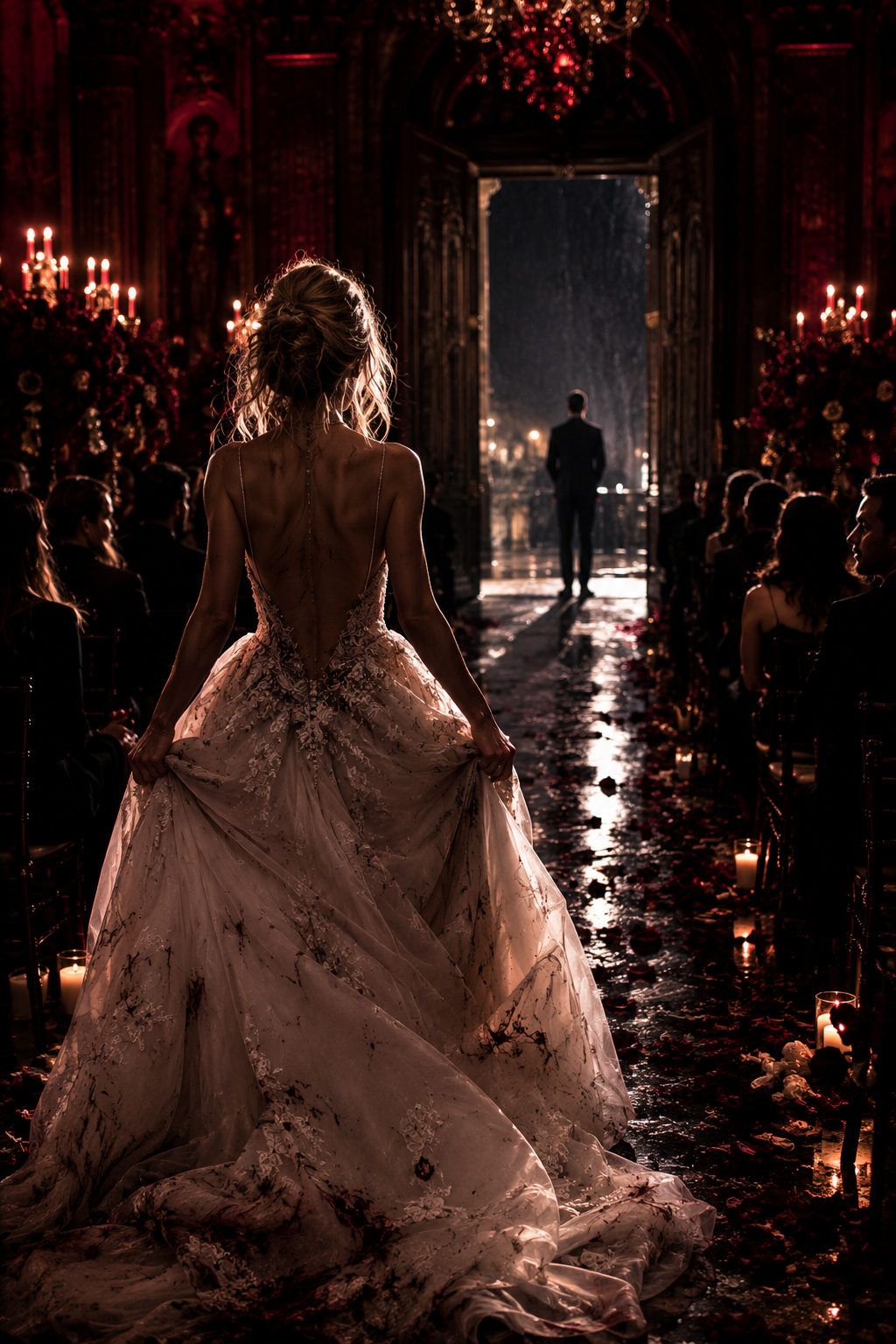
Until I Said No – Chapter 1 – This Is The One
We were fifteen the first time he kissed me.
Behind the gym, after a pep rally, both of us laughing because neither of us actually knew what we were doing. My back against cold brick. His hands not knowing where to go. Somebody’s older brother yelling at us to get a room from across the parking lot, which felt, at the time, like the most romantic thing that had ever happened to anyone.
His mom drove us to the movies for the next three years.
She’d wait in the car with a book, never complained, always had gum in her purse for both of us like she’d started thinking of me as hers before I’d even decided I was staying.
My dad taught him how to throw a football in our backyard.
Patient in a way he’d never been with my actual brothers. I used to watch them from the kitchen window, my dad’s hand adjusting his elbow, both of them laughing about something I couldn’t hear, and think, this is just what happens now. This is just how things are.
By the time we were seventeen, our families didn’t really feel like two families anymore.
His mom called my mom “sister.”
Not as a joke. As a fact. She said it at Christmas one year, introducing my mother to a cousin, and nobody in the room even blinked. That’s how normal it had become. Nobody was surprised. I don’t think I was even surprised.
He was my first boyfriend.
First heartbreak that never actually became a heartbreak, because we always found our way back within a week, sometimes within a day, sometimes before either of us had even really left.
First person I called when something good happened – I got into my top school and he picked up on the first ring, already yelling before I’d said a word, like he’d been waiting by the phone.
First person I called when something bad happened, too. When my grandmother died. When I failed my first college exam and cried in a parking garage stairwell. He drove forty minutes at midnight both times and didn’t say much. Just sat there. Let me lean on him until I stopped shaking.
First name under “favorites” in my phone, which I never had to think about, because who else would it be.
I lost my virginity to him at sixteen, in his childhood bedroom, with a Josh Turner poster watching from the wall.
That’s either the least sexy detail I own or the most honest one. I still haven’t decided. I remember being more nervous about his mom coming home early than anything that was actually happening. I remember him asking if I was okay, twice, in the middle of it, like the answer actually mattered to him more than finishing.
He was a good man.
I want to say that clearly, before anything else, because I think people assume you leave someone because they were cruel to you. He wasn’t. Not once. Not almost.
He remembered things. Small things. That I hated cilantro, that I got quiet before I got sad, that my mother’s birthday was two days before his and he always got her a separate gift so it wouldn’t feel like an afterthought.
He showed up. Every time.
If my car wouldn’t start, he already had jumper cables.
If I forgot my charger, he had one in his truck.
He had a solution before I had a problem.
He carried my mother’s groceries in once and she cried about it at Thanksgiving, out of nowhere, just from watching him do it. My whole family looked at each other like – see, this is the one, this is exactly the one.
I loved him.
I loved him the way you love a house you grew up in. Familiar in every corner. Load-bearing in ways you never examine, because you’ve never had to live anywhere else and you have no idea what it would feel like to walk through a door that wasn’t this one.
So when he proposed at twenty-four – in the restaurant where we had our first real date, both our families “coincidentally” already seated at a table in the back – I said yes.
Of course I said yes.
What else do you say, when this is all you’ve ever known.
The proposal wasn’t really a question.
It was a formality.
We’d both been answering it since we were fifteen.
We’d talked about the venue two years earlier, half-joking, drunk on cheap wine at somebody else’s wedding, pointing at a barn and saying that one, obviously that one.
We’d already picked names for kids we didn’t have. Argued about them, even, the way you argue about things you assume are inevitable.
We’d built, without ever deciding to, an entire future so clean and complete that it never occurred to either of us to check whether it actually fit. It made sense. It matched the picture everyone had already been drawing of us since high school.
His mom cried when he got down on one knee.
My mom cried harder, one hand pressed flat against her chest like she was holding something in.
Somebody’s aunt started clapping before he’d even finished the sentence. The whole restaurant turned to look. A waiter appeared with champagne we hadn’t ordered, already smiling like he’d known this was coming before we did.
And I remember standing in the middle of it – his hand in mine, the ring catching the light, both families already talking over each other about dates and venues and who would host the shower – and feeling something I didn’t have a name for yet.
It wasn’t doubt.
Doubt is loud.
This wasn’t.
Just a very small voice underneath all the noise, asking a question nobody in that restaurant was equipped to answer.
Is this what you want, or is this just what happens?
I didn’t listen to it.
Why would I.
I had a ring. I had two families who’d already merged into one loud, loving unit that called itself, unprompted, “the family,” at every holiday, every group text, every framed photo on every wall. I had eight years of proof that this worked. That we worked. Whatever this feeling was, it clearly wasn’t important enough to override eight years of evidence.
So I let it go.
I let his mom start talking venues in the car home, already pulling up photos on her phone from the passenger seat.
I let my dad hug him a little too long in the parking lot, the way dads do when they’re not great with words but want you to know something anyway.
I let myself get swept into the machinery of it – two families becoming one, officially, on paper, when it had basically already happened everywhere except paper.
I told myself the voice was nerves.
Everyone gets nerves.
That’s what my mother said, days later, when I mentioned it – carefully, phrased so gently it barely qualified as a confession.
She laughed. Not unkindly.
“Honey, that’s just what getting married feels like. You’ll be fine once the dress comes in.”
So I waited for the dress to come in.
I did not expect the dress to be the thing that finally made me listen.